
My name is Amy, and I am currently travelling through Spain and Portugal. Welcome to my blog www.templeseeker.com, which all about slow cultural travel. Today, join me in exploring Avila, Spain, one of the highest and coldest Spanish cities.
Reasons to visit Avila, Spain
I’d never really heard much about Avila, until a recent visit to Salamanca, where they explained that one of the buildings of Salamanca University was in Avila, which peaked my interest. They spoke highly of Avila’s history and it left me intrigued. There are two main reasons why I wanted to visit Avila. The first is for the medieval walls. Avila boasts the best preserved and longest stretch of medieval walls in Europe. The second reason why I wanted to visit Avila was because it is a site of Catholic Pilgrimage, and if you know me, you will be well aware that I love a good Church!
Disclosure: templeseeker.com is a participant in the Amazon Services LLC Associates Program and other affiliate advertising programs designed to provide a means for us to earn fees by linking to Amazon.co.uk, Get your Guide and other affiliated sites. Affiliate links may be used in this article on ‘Avila, Spain’, but they do not impact on the price that you pay and they do help me to get this information to you for free.
When is the best time to Visit Avila, Spain?
Why I decided to visit Avila in the winter is beyond me! It felt like a good idea at the time – I had some spare travel time for a short trip, and Spain would be warmer than the UK at this time of year….you’d think! But, no, I left Liverpool when it was 3°C and arrived in Avila to 3°C and pouring rain! Yes Avila is over 1100 metres above sea level and as a result of the altitude, it can get snow during the winter time. Maybe visiting in March to June would be better!
I would recommend visiting in the shoulder season such as April/May or in September/October to avoid crowds of tourists and intense heat – it can reach 29-31°C in August, which may be too hot for you.
If you are visiting as a Catholic pilgrim, the main pilgrimage and festivities for Santa Teresa of Ávila (St. Teresa of Jesus) take place around her feast day on 15 October. Other key festivals include the medieval festival and Holy week. The vibrant Jornadas Medievales (Market of the Three Cultures) in early September, features medieval markets, jousting and street performers. Holy week, known in Spain as Semana Santa is a very spiritual and solemn affair in Avila. The city hosts over 15 processions featuring 39 pasos (sculptures) paraded through the streets.
Watch My YouTube Video on Avila, Spain
How to get to Avila
To get to Avila, fly into Madrid and then travel from Principe Pio by train, which will take you around an hour and a half. Just remember that Principe Pio station is massive. This, coupled with the fact that they board trains half an hour early in Madrid means that you should aim to get to Principe Pio at least 45 mins to an hour before your train. You don’t want to miss it! The journey is an interesting one and you will see the change in landscape as you head up into the hills.
How long to spend in Avila Spain
With such a short train ride from Madrid, it is actually possible to see Avila in a day trip from Madrid, as long as you are prepared to do a fair bit of walking. One day is long enough to get a feel for the town and to experience the main sites including the Church of Saint Theresa, the city walls and the Cathedral. However, I would recommend staying over one night in Avila if you can. This will mean that your itinerary is not rushed. You can enjoy tapas on Plaza Mayor and be the first at the Churches in the morning.
Photography copyright: All the images in this blog are original photography by Amy Green and are property of @templeseeker (unless otherwise stated). Please do not use these without permission or without giving credit. If you would like to use any of these images please email: amy@templeseeker.com for permission.
Where to stay in Avila
It’s really important that you book your accommodation within the old town of Avila, so that you can easily walk to the main attractions. I stayed at the beautiful Hotel El Rastro which had a really nice authentic and countryside feel to it. It is right outside the Tower of Los Guzmanes and walkable to the main attractions. As it was off season, I paid just €26 for one night in a single bedroom with my own private bathroom.
Templeseekers Top Tips for Avila Spain
- Pack warm clothes as it is always colder than the rest of Spain due to its altitude (hat and gloves for winter).
- Wear good sturdy walking boots as you will spend a lot of time on your feet walking round the old town.
- Spend at least one day in Avila, and stay overnight if you can to truly experience the town.
- Market day is Friday when they have the fruit and veg market in Plaza Mayor.
- Learn some Spanish before you go as it will go a long way! Being a smaller town outside of Madrid, you are less likely to find English speakers there.
- Take a mixture of cash (€) and credit/debit card (tarjeta is the Spanish for card – you might need that word!)
- You can enter the Church of Santa Theresa – enter on the right hand side and go through the curtain (please make a donation as a tourist).
- Avoid visiting the Church of Santa Theresa during services, so Sunday is generally a day to avoid.
- Head out to Los Cuatro Postes for sunset – you will see wonderful views of the city walls at this time and get some great photographs during ‘twilight’.
- Remember to dress conservatively for the Churches, cover your arms and legs and avoid wearing a cap.
- Make sure that you try the famous local dish – ‘Chuletons de Avila’ which are the gorgeous cuts of Avila beef.
- Plan two days in Avila if you would like time to explore the Convents and Churches around Avila such as the Real Monasterio de Santo Tomás or the Monasterio de la Encarnación.
History of Avila
Avila is a town that has been conquered several times throughout history by the Romans, Visogoths and Moors. The medieval town walls were built in 1090, and they were built over the original Roman walls of the city.
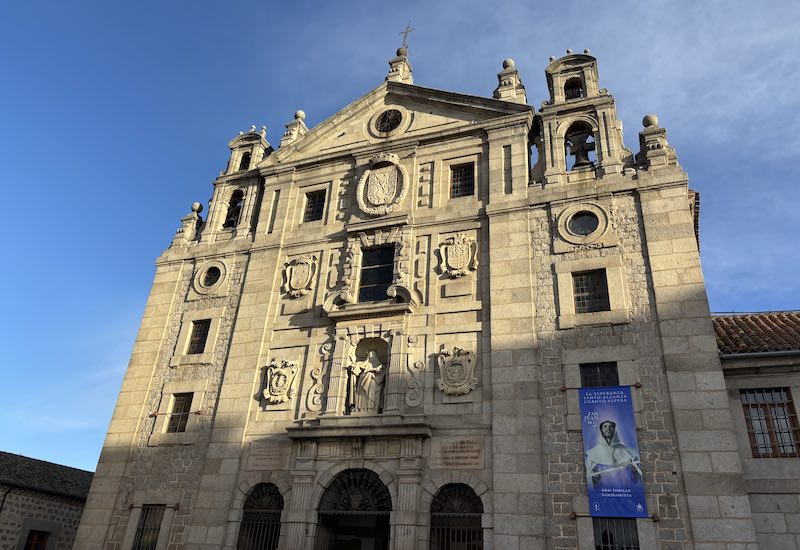
In 1515, Saint Teresa was born and she became a nun at just 20 years old, Theresa of Avila wrote extensive prayer and poems. She was a key figure in the reformation of the Carmelite order, by taking it back to the basic principles of austerity and love for God and Jesus. She started the Carmelite Descalced order, meaning ‘without shoes’. That shows you how simplistic she believed that life should be when you are devoted to God. She was said to have had many religious experiences or ‘raptures’ during her life which people said may have been due to the power of God, but today it is thought by many that she may have suffered from epilepsy, which was extremely misunderstood at the time. Nervertheless, she was a key figure in the Catholic Church and she became cannonised as a Saint in March of 1622. Saint Teresa was baptised in the Church of John the Baptist near Plaza Mayor and the Church of Saint Teresa of Avila, was built on the site of her birth.
Itinerary for one day in Avila, Spain
Start your visit at the Church of Saint Teresa of Avila because this opens at 9am or 9.30am, compared to the Cathedral which does not open until 10am.
9.30am Church of Saint Teresa of Avila
Enter the Church of Saint Teresa of Avila on the right hand side, but before you do, make sure to admire the carved facade. On the far left of the inside of the Church, you can enter Capella de Teresa, where you can see the chapel built on the exact spot where she was born. Through that chapel, you will also find a reconstruction of her chamber.
10.30/11:00am – Avila Cathedral
The Cathedral of Avila is very significant, because it is believed to be the first Gothic Cathedral in Spain, built between 12th and 14th Century. Get there at 10am as it opens for unobscured pictures. It costs €10 to go inside Avila Cathedral, and is well worth it. Plan to spend around an hour to an hour and a half for your visit, to listen to the complimentary audio guide and explore all of the side chapels.
Have a look at the cloister if it is open (they may be doing some construction work) and also take note of the row of lions outside Avila Cathedral, which are there for protection and to ward off evil spirits.
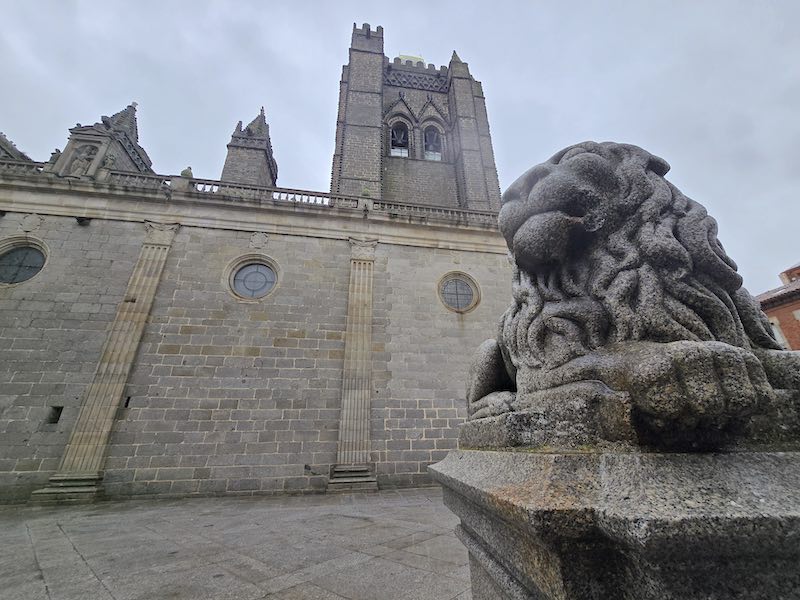
The inside of the cathedral is constructed in the shape of a Latin cross, with impressive vaulted ceilings. As soon as you enter the Cathedral, you will be amazed by the alabaster stone retrochoir (‘El trascoro’ in Spanish) which displays events from Jesus’ life including the central adoration of the Magi.
Other noteworthy highlights are the carved choir stalls and the alabaster sepulchre of ‘El Tosado’, a fine example of early 16th-century Spanish Renaissance funerary sculpture. ‘El Tostado’ was a famous Catholic scholar and also a Bishop here in Avila.
12:00-1:00pm Lunch on Plaza Major
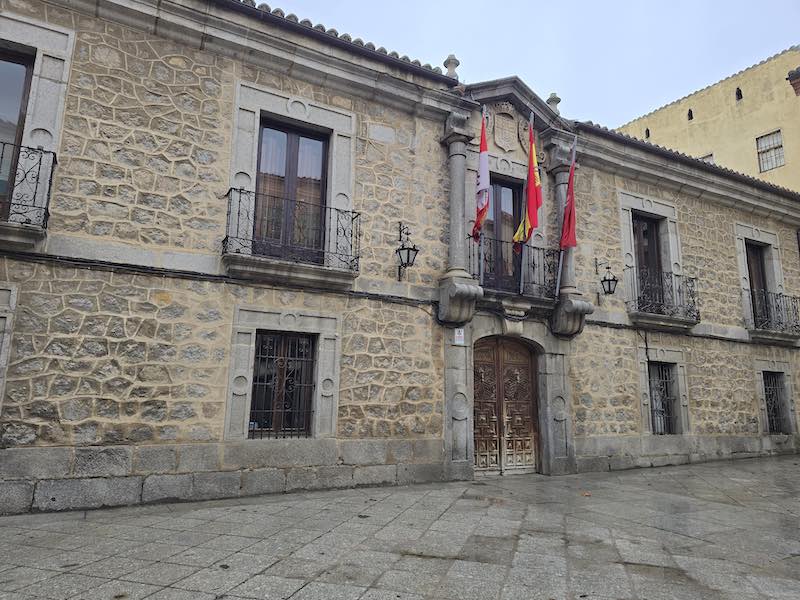
Head to Plaza Major for lunch, otherwise known as Plaza del Mercado Chico. This ambiente town square has roots dating back to the late 11th century, when the city was repopulated. While it has functioned as a central public square for over 900 years, the current layout and Town Hall building were largely developed between 1839 and 1845.
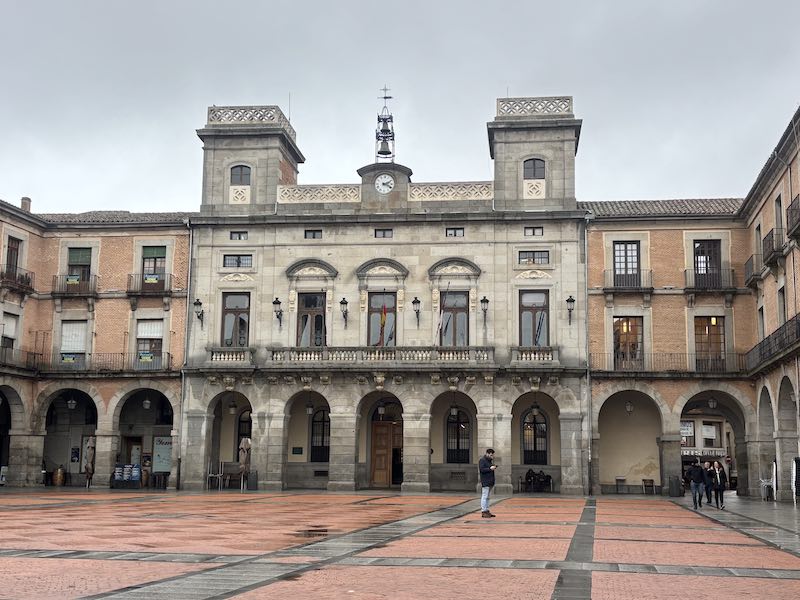
So what should you eat on Plaza Major in Avila? I would recommend that you focus on traditional Castilian cuisine, including roasted suckling pig, carne asada, patatas revolconas (mashed potatoes with paprika and bacon), and the famous local dessert, yemas de Santa Teresa. Some good restaurants include Restaurante El Ranchito, La Campana, El Brillante and Casa Lucas.
Look for Saint John the Baptist Church in the corner of Plaza Major. This is the Church where Theresa of Avila was Baptised.
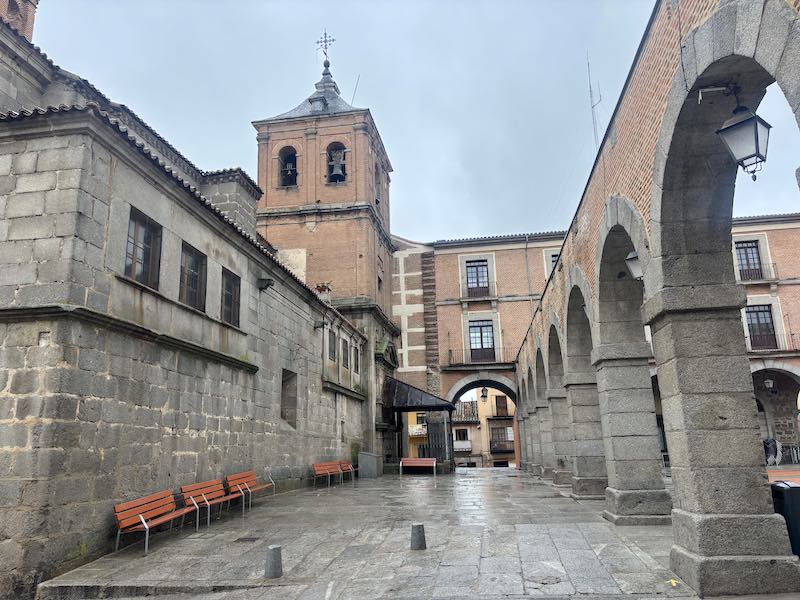
2:00pm Walk the walls of Avila – Passeo Puerto Rastro
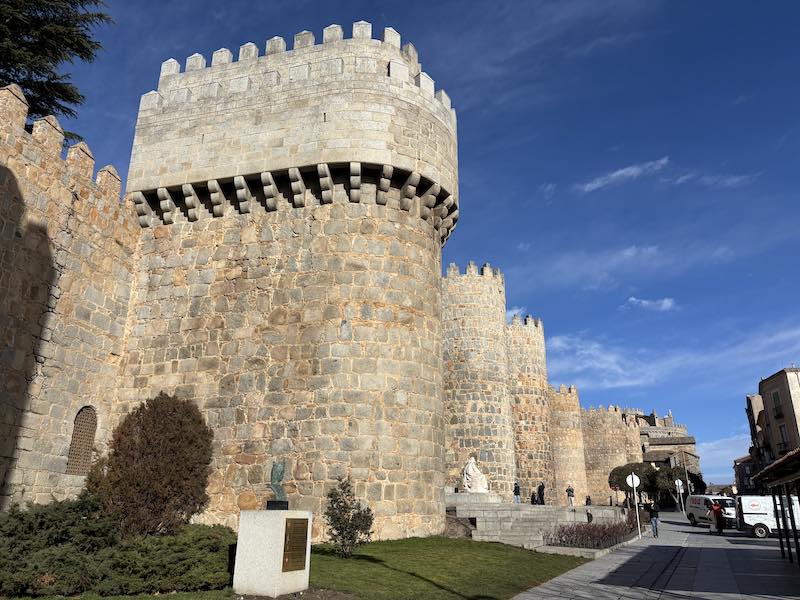
After lunch, spend some time walking the medieval walls along Passeo Puerto Rastro. The walls along the Paseo del Rastro in Ávila are part of the medieval fortifications of the city, which largely date back to the 11th and 12th centuries. Specifically, these walls were constructed or rebuilt around 1090 to 1099.
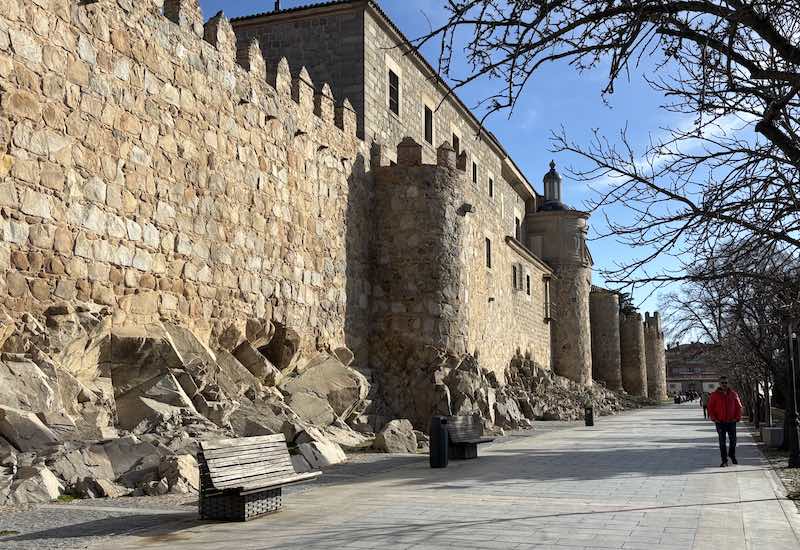
Exit at the Puerto Rastro gate and walk along the stretch of walls to the main gate and Saint Theresa Square. If you have the time and energy, it is possible to walk along the walls and there are several gates you can start from including the Puerta del Alcázar (the most popular entrance) and the Puerta del Puente.
3:00pm Alcazar Gate, Plaza de Santa Theresa and the Church of San Pedro
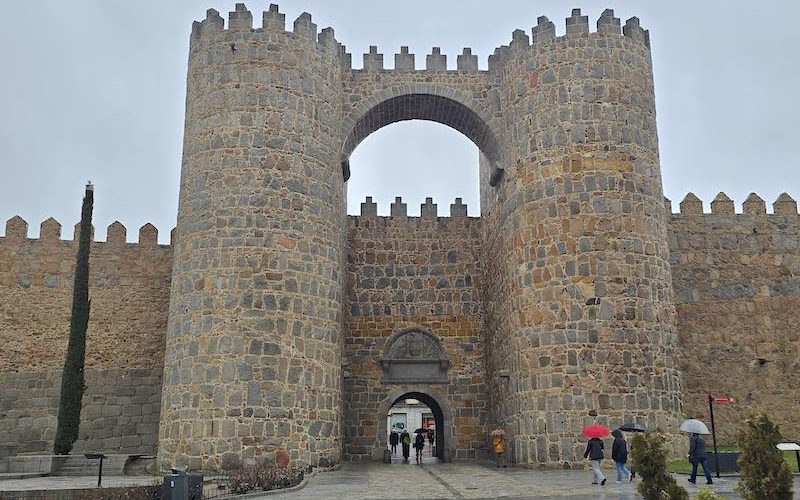
Continue following the walls round to Alcazar Gate, which is known as the Gate of the Fortress. This is the most grand, iconic, and historically significant entrance in the medieval walls of Ávila, Spain. The Alcázar Gate features twin towers approximately 20 metres high. It connects directly with the Cathedral’s apse, acting as a fortified, double-arched entrance flanked by two massive cylindrical towers, part of the 2,516 metre, 87 turret circuit.
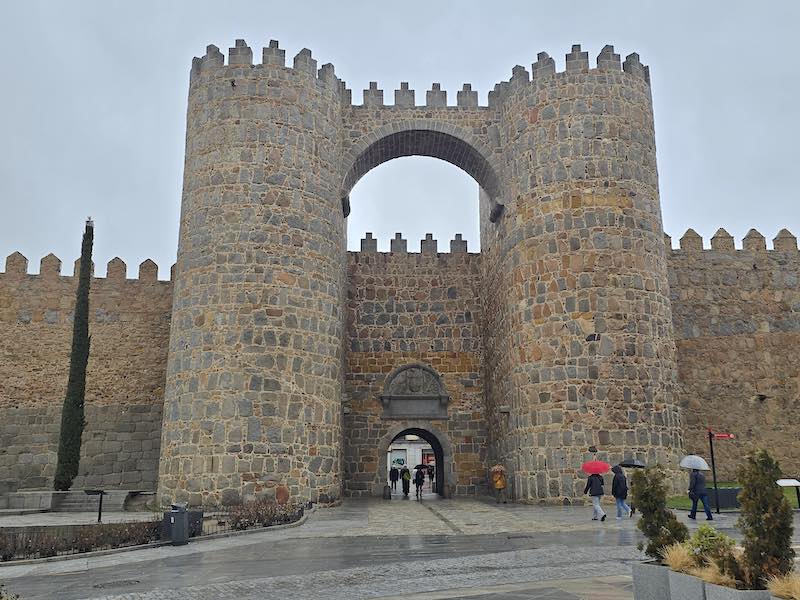
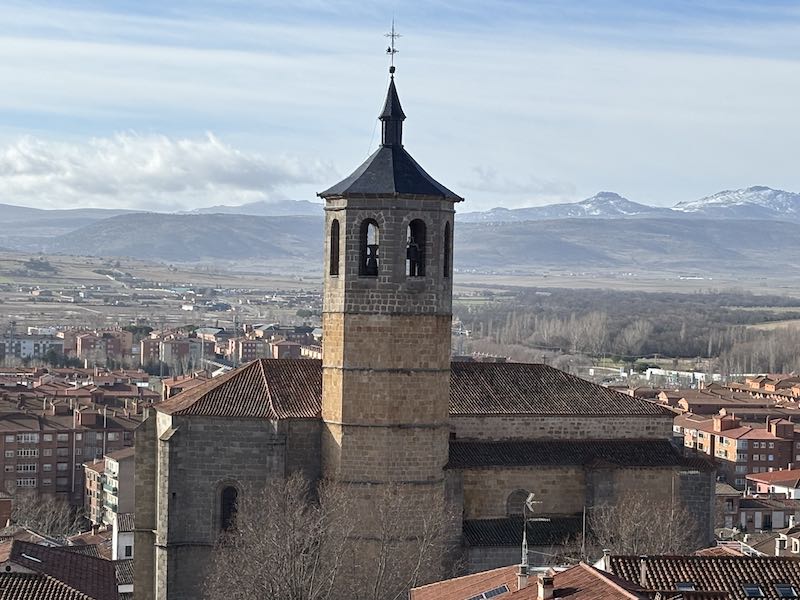
The Alcazar Gate is positioned at the head of Plaza de Santa Tesesa or Plaza del Mercado Grande, and at the opposite end you will find the Church of San Pedro and a statue of Santa Teresa herself. The Church of San Pedro is a premier example of Romanesque architecture. Built starting circa 1100, this 12th-century temple features typical Romanesque elements, including robust stone walls (specifically “bleeding granite”), a triple apse, and a Latin cross floor plan and a 12th-century bell tower.
6:00-7:00pm Los Cuatro Postes – best enjoyed at Sunset or Twilight
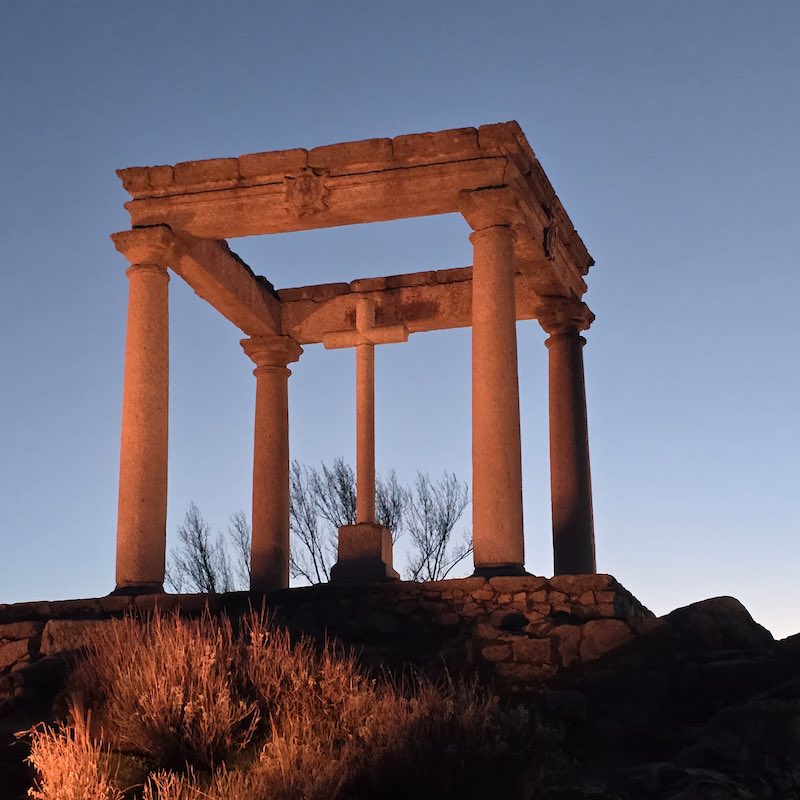
One of the most recommend things to do in Avila in the evening is to visit Los Cuatro Postes. Los Cuatro Postes is a 16th-century religious monument featuring Doric columns. You will see a granite cross at the centre of this structure, which stands at the top a hill facing the medieval walls of Ávila. Discover the fascinating legend of Saint Teresa, which is associated with this site. There is a plaque nearby that tells us that Saint Teresa’s uncle prevented her and her brother Rodrigo from pursuing a life of martyrdom when they were children. Enigmatically, Teresa removed her sandals and exclaimed, “I will not take even the dust of Ávila with me.”
This gorgeous little temple and viewpoint is free to visit, you just need to be prepared to do a 20 minute walk outside of the city walls to get there. After crossing the Roman bridge over the Adaja River, climb the uneven stone steps to the hill where this four-post temple is located. Take photos of the fabulous view of the Ávila Walls and see some of your favourite sights on the other side, including the city’s museums and churches. If your feet are tired from walking around Avila all day, another option is to jump in a tourist tuk-tuk to run up to the temple.
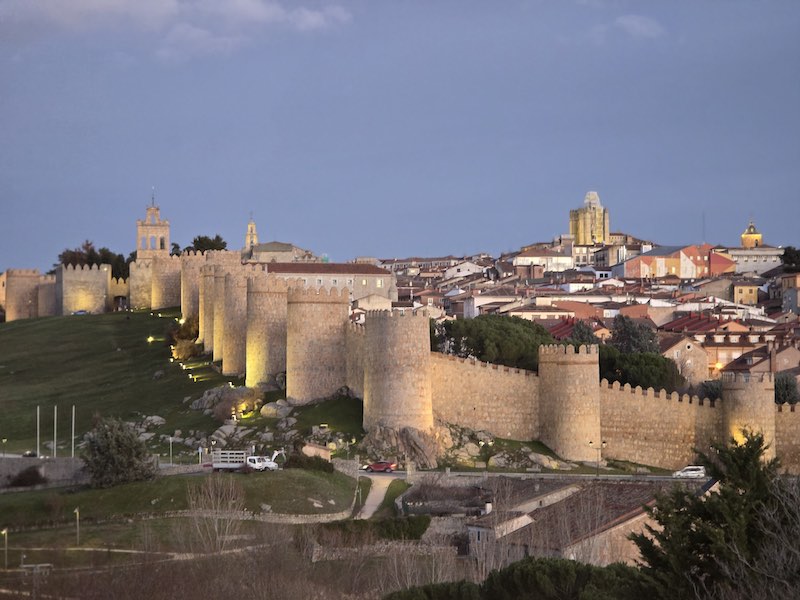
I was skeptical about whether this mini-hike would be worth it, but it definitely was. I arrived around 6.30pm and found out that this viewpoint is ideal for watching the sunset and catching pictures in the ‘blue hour’ or twilight. Enjoy the view of the city at night when the monument’s four posts, as well as the city walls, are beautifully illuminated.
8:00-9:00pm Eating out – Trying Chuletóns of Avila
Make sure that you finish your day in Avila trying the gorgeous chuletóns of Avila. The chuletón is a large, bone-in rib steak or T-bone from the province, typically sourced from the high-quality Avileña-Black Iberian cattle breed. Obviously not one for vegetarians, but if you are a meat eater you can’t leave Avila without trying this dish. Remember that in Spain they eat much later than in the UK, so don’t expect restaurants to open until after 7.30pm or 8pm and remember to reserve ahead for the best restaurants.
⭐ Most Recommended
Restaurante Bococo – One of the most talked-about spots in town for chuletón; known for perfect grilling and great value with set menus that include the steak.
Parrilla El Rancho – Traditional asador just outside the centre, serving chuletón over a wood fire since 1969 — a beloved local institution. You need to get a taxi or a ride, as it is out on the N403, but it is worth the journey.
🍷 Classic Restaurants with Great Chuletones
Los Candiles – Elegant Castilian eatery with excellent steaks and traditional dishes, very popular (reserve ahead to avoid disappointment).
Restaurante Alcaravea – In the cathedral square; great ambience and quality chuletón paired with local sides.
Restaurante Siglodoce – Historic setting and consistently excellent meat with classic Spanish cooking.
Tres Siglos (CHULETON de ÁVILA) – Well-liked for big ribeye steaks (often served with starters and wine).
Around Avila – Convents and Churches beyond the town
If you have the time and energy, there are also some smaller Churches and Convents around Avila town. Key monasteries to visit in and around Ávila, Spain, largely centre on the life of St. Teresa, featuring significant religious sites like the Real Monasterio de Santo Tomás and the Monasterio de la Encarnación.
Many people decide to stay overnight to explore these before travelling onward to Madrid or Salamanca.
Further Reading on Spain
If this article was helpful for you, you might also enjoy the following articles about other destinations in Spain…
- How to spend a weekend in Madrid
- Salamanca, Spain – Could this be my new favourite city?
- Is Bilbao worth visiting?
- How to spend two days in Donostia San Sebastian
- Is Santander worth visiting?
- 7 Magnificent Islamic Sites in Spain