
Welcome to my cultural travel blog, Templeseeker! My name is Amy, and I explore some amazing destinations around the world, so that you can enjoy them! You may have noticed from my bio that I am a bit of a culture vulture, and I absolutely adore travelling in Portugal and Spain. I recently did a solo overland trip from Porto to Madrid, with a fantastic stop in Salamanca. I had no idea what to expect from Salamanca, Spain – this city was originally just an easy stop off point along the route. But, wow, did Salamanca, blow me away?! In today’s blog, I am going to share with you my top travel tips for Salamanca in Spain, including where to stay, where to eat and what to do.
Disclosure: templeseeker.com is a participant in the Amazon Services LLC Associates Program and other affiliate advertising programs designed to provide a means for us to earn fees by linking to Amazon.co.uk, Get your Guide and other affiliated sites. Affiliate links may be used in this article on ‘Salamanca, Spain’ but they do not impact on the price that you pay and they do help me to get this information to you for free.
I will admit that I was a little apprehensive about going from Portugal into Spain. I had become ridiculously comfortable in Portugal after spending a couple of semesters at The University of Coimbra. The language, food and culture of Portugal had all become very familiar to me, and heading over the border to Spain was once again pushing myself out of my comfort zone!
Yet, there were several positive things that struck me as soon as I disembarked from the bus in Salamanca, Spain. The flatness of Salamanca was a joy for me after the cobbled stones and challenging hills of Coimbra and Porto. The Spanish language seemed to be easier to understand than I had anticipated. Although I was speaking some kind of ‘Portuganol’ (Portuguese-Spanish hybrid), I was understanding more Spanish than I expected to. Then, there is the fact that the city of Salamanca is a University city, which again made me feel instantly at home, because I love academic towns and cities of Europe.
This academic legacy is still very much alive today, giving Salamanca its youthful energy while preserving its historical grandeur. The city’s golden sandstone buildings, many adorned with intricate carvings, tell stories of its powerful past, from Roman influence to Moorish conquests and the golden age of the Spanish Empire. Walking through its streets feels like stepping back in time, a truly immersive experience for any history enthusiast. If you know me well, you will be aware that I always ask myself one question when I visit a new city – could I live here? And the answer is yes, absolutely!
Frequently asked questions about Salamanca, Spain
Here are some of the popular questions that I have been asked by my readers about Salamanca…
When is the best time to visit Salamanca, Spain?
Spring (April-May) and autumn (September-October) offer pleasant weather and fewer crowds. I visited in October, and the weather was perfect – it was not too hot and not too busy. Summer can be too hot for some, but the city’s lively atmosphere persists. I personally prefer traveling in shoulder seasons to avoid the peak tourist rush, allowing for a more authentic and relaxed exploration.
Here’s a quick guide on what to expect at different times of the year in Salamanca:
| Season | Weather | Crowds | Notes |
| Spring | Mild, pleasant | Moderate | Ideal for walking |
| Summer | Hot, sunny | High | Lively nightlife |
| Autumn | Cool, crisp | Moderate | Beautiful colours |
| Winter | Chilly, quiet | Low | Fewer tourists |
What is Salamanca, Spain, famous for?
Salamanca, Spain, is most famous for its stunning golden sandstone architecture, particularly its magnificent Plaza Mayor, its two impressive cathedrals (Old and New), and its historic University of Salamanca, which is one of the oldest in Europe. It’s also known for its lively student atmosphere and rich cultural heritage.
Photography copyright: All the images in this blog are original photography by Amy Green and are property of @templeseeker (unless otherwise stated). Please do not use these without permission or without giving credit. If you would like to use any of these images please email: amy@templeseeker.com for permission.
What are the main attractions in Salamanca?
The main attractions in Salamanca include the Plaza Mayor, the Old Cathedral and New Cathedral, the University of Salamanca (especially its historic facade), the Casa de las Conchas (House of Shells), and the Convento de San Esteban. Climbing the Ieronimus tower for panoramic views is also a highlight.
How many days do you need in Salamanca?
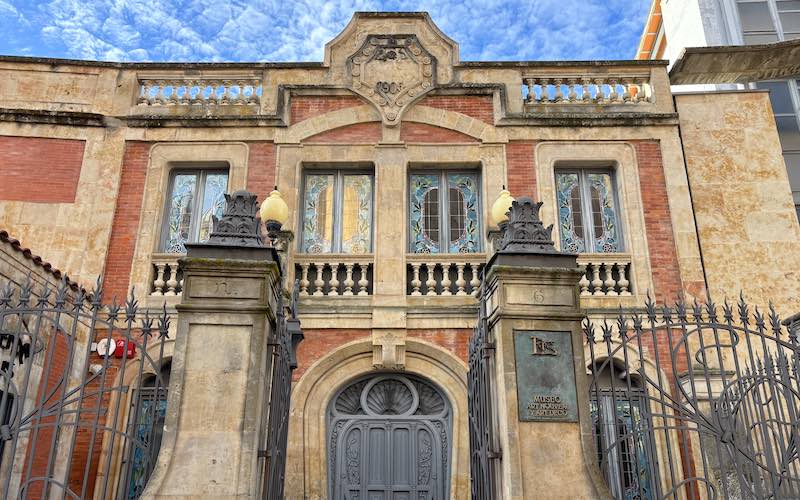
I recommend spending at least two to three full days in Salamanca, Spain. This allows you enough time to explore the main attractions like the Plaza Mayor, both cathedrals, the University, and the Casa de las Conchas, as well as to enjoy the local cuisine and soak in the city’s atmosphere at a relaxed pace. Three days would allow you to also explore many of Salamanca’s museums as well, including the Art Nouveau and Deco Museum, the Salamanca Museum of Trade and Industry and the Museum of Automotive History.
What can I eat in Salamanca?
When in Salamanca, Spain, you must try the local gastronomy! Popular dishes include Hornazo (a savory pie filled with meat), ‘Jamón de Guijuelo’ (cured ham), and various tapas. I highly recommend Gran Tasca Bar Manzano and La Oficina for traditional Spanish food. If you’re brave enough to stomach Octopus (pulpo) then head to Restaurante corte y cata. I gave the ‘pulpo’ a miss this time, although I did eat Octopus and Squid in San Sebastian! I did have a fantastic Paella in La Terraza del Montalvo.
The city is also known for its excellent cheeses and wines from the region. Head to Salamanca Ibérica or La Favorita, which have excellent meat and cheese selections. A good idea is to get up early and go to Mercado Central, where you can find local chorizo, iberican ham, cheeses and wines for good value. Don’t forget to enjoy churros with chocolate for your afternoon snack (they are sometimes even eaten for breakfast!)
I have to admit that at one point, I literally couldn’t eat anymore ‘jamón’ and so I decided to see what the city had to offer in terms of world food. I found an amazing Vietnamese cafe called ‘LeTrá’ where I had a gorgeous and reasonably priced Pho (€13 for Pho, an egg and a fizzy drink). You will be pleased to know that you can find most world foods in Salamanca, including Italian, Chinese, Indian and burger bars.
Is Salamanca, Spain, a UNESCO World Heritage site?
Yes, the Old City of Salamanca was declared a UNESCO World Heritage site in 1988, recognising its outstanding universal value due to its exceptional historical and artistic significance, particularly its well-preserved historic center and architectural masterpieces. As ‘templeseeker’, this is one of the reasons why I love it so much – the architecture is phenomenal and the two adjoining Cathedrals were a particular highlight for me.
Is Salamanca Spain a good city for solo female travelers?
Yes, Salamanca is an excellent city for solo female travelers. It’s considered very safe, and as a solo female traveller in my forties, I felt extremely safe and comfortable for the whole three days that I was there. The city center is walkable, and there’s a vibrant, welcoming atmosphere, largely due to its large student population. It offers a rich cultural experience with plenty of historical sites and a lively nightlife.
Salamanca is generally a very safe city. However, like any travel destination, it’s wise to take standard precautions: be aware of your surroundings, especially at night, and keep an eye on your belongings in crowded areas. I always share my itinerary with a trusted friend or family member back home in the UK, and I make sure my phone is charged.
Practical tips for solo female travel in Salamanca, Spain
Based on my travel experiences, including countless solo adventures in Spain, here are some key tips for making the most of your trip to Salamanca:
Getting there and around Salamanca
You are likely to arrive in Salamanca by bus or train. The bus station is around a 20-25 minute walk from the old town of Salamanca, and it’s flat and well signposted. I arrived by bus from Porto. I booked with Flixbus, but had to change halfway to a bus with a different company. The staff looked after me well though, making announcements in Spanish and English, and also helping me to transfer my bag to the Salamanca bus just after the Spanish border.
There is also The main train station in Salamanca is ‘Estación de Salamanca’, also known as Vialia, located at Paseo de la Estación, 37004 Salamanca. It is run by the Spanish national rail company, Renfe, and connects to several other cities including Madrid and Valladolid. I would recommend downloading the Renfe App and booking train tickets online in advance. Remember that Spanish Railway stations have a layer of security to go through when you travel by train, so arrive at the station earlier than you think that you need to.
Salamanca itself is very walkable city, and its compact city center means you can easily reach most attractions on foot. For anything further afield, local buses are reliable. I often find that walking allows me to discover hidden alleys and beautiful details I might otherwise miss. I didn’t need to get any local buses within the city centre, walking was completely sufficient. Also, it’s good to know that Uber works in Salamanca, so it’s a good option for getting to and from the station.
Accommodation for solo travelers
There are many excellent hotels, hostels, and guesthouses in Salamanca that cater to solo travelers. I always prioritize central locations for convenience and safety. If you’re looking for unique experiences, you might consider platforms like Worldpackers, where I’ve found accommodation-for-work swaps in other destinations.
While I was staying in Salamanca, I stayed at ‘Hotel Gran Vía by gaiarooms’, which was very clean and ample accommodation, perfect for a few nights in the city. It was walkable to Plaza Mayor and Salamanca-La Alamedilla station. It had a lift and good internet connection (which is very important to me as a blogger). Hotel Gran Via by Gaiarooms have single and double rooms, depending on whether you are budge conscious or willing to pay a bit more for extra room. Interestingly, it’s a predominantly online booking system, with a code and key card to enter, so you can actually check in online, without having to speak to someone on the front desk! If you don’t have internet or your own device, you can use the iPads available to check in when you arrive.
Other good alternative places to stay in Salamanca include:
- Hotel Rector Salamanca – (luxury/boutique) Highly rated boutique hotel with elegant rooms and personalised service.
- Eunice Hotel Gastronómico – Luxury gastronomic hotel in a charming historic building.
- Hotel Hospes Palacio de San Esteban – (Templeseeker’s pick!) Stylish hotel in a converted convent near the old town.
- Grand Hotel Don Gregorio – Elegant option just minutes from major sights.
- Hotel NH Collection Salamanca Palacio de Castellanos – Reliable mid-range choice in the heart of the city.
- Hotel Catalonia Plaza Mayor Salamanca – Classic hotel with comfortable rooms near the main square.
- Hotel Eurostars Las Claras – Great value and very close to sights.
- Sercotel Puerta de la Catedral – Well-reviewed hotel near the cathedral.
- Sercotel Las Torres Salamanca – (mid-range) A popular mid-range option near restaurants and shops.
- Hotel Alameda Palace – Big, classic hotel near the train station (good for arrival/departure days).
- Hotel Salamanca Montalvo – (Good for backpackers or short stays) Affordable and clean.
- Gran Hotel Corona Sol – (Top budget pick) Budget hotel with decent ratings.
- Hotel Soho Boutique Salamanca – Cheaper boutique-style rooms.
Finally, if you are looking for something outside the City that is more scenic and relaxing, opt for Hacienda Zorita Wine Hotel and SPA, an SLH Hotel. This is a Fantastic countryside choice just 20 min from Salamanca — ideal if you want a peaceful stay with wine-estate views and a spa!
Best time to visit Salamanca, Spain
Spring (April-May) and autumn (September-October) offer pleasant weather and fewer crowds. Summer can be hot, but the city’s lively atmosphere persists. I personally enjoy traveling in shoulder seasons to avoid the peak tourist rush, allowing for a more authentic and relaxed exploration.
Here’s a quick guide on what to expect at different times of the year in Salamanca:
| Season | Weather | Crowds | Notes |
| Spring | Mild, pleasant | Moderate | Ideal for walking |
| Summer | Hot, sunny | High | Lively nightlife |
| Autumn | Cool, crisp | Moderate | Beautiful colours |
| Winter | Chilly, quiet | Low | Fewer tourists |
Must-see historical and architectural wonders in Salamanca
Salamanca, Spain, is a treasure trove of architectural marvels. Here are some of the absolute highlights that every traveller should experience:
Plaza Mayor: The heart of Salamanca
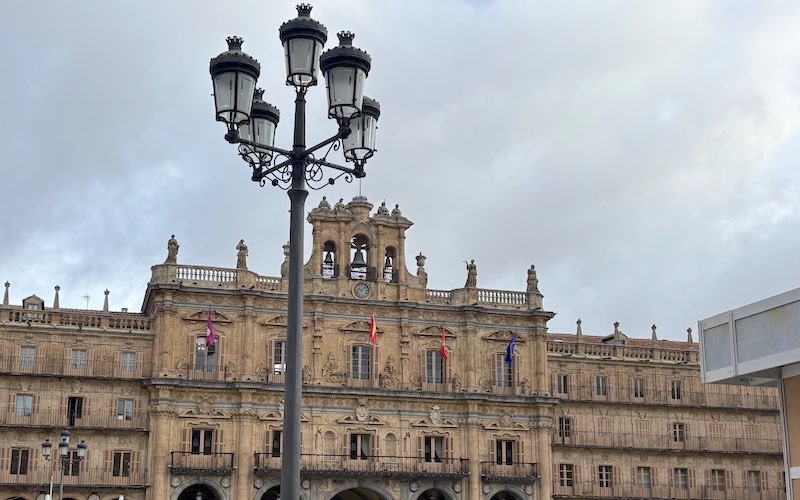
The Plaza Mayor is undoubtedly one of Spain’s most beautiful squares, and it’s the beating heart of Salamanca. Plaza Mayor was built between 1729 and 1755, designed by the Churriguera family and completed by Andrés García de Quiñones. Designed in the Baroque style, it’s a stunning example of Spanish plaza architecture.
When you are visiting Plaza Mayor in Salamanca, take a close look at the medallions mounted on the walls around the square. Each medallion has the head of someone famous from Spanish or world history, including writers, artists, Kings and Queens and Politicians. Some of them are blank because they are awaiting new figure heads, but some of the busts or heads have been removed because they are politically controvercial, such as the Franco bust which was removed in 2017 as part of the process of removing Francoist symbols from public spaces under the Historical Memory Law. Some people say that there was a Hitler bust also removed, but this is debatable, and many say that there never was a Hitler bust in Plaza Mayor, because the busts represented famous Spaniards, and Hitler was German.
I love to find a spot at one of the many cafes, order a coffee, and simply soak in the atmosphere. It’s a perfect place to people-watch, observe the intricate details of the surrounding buildings, and feel the pulse of the city. At sunset, the Plaza takes on an almost magical glow as the sandstone turns a deeper shade of gold – a truly unforgettable sight.
The Salamanca cathedrals – The Old (Vieja) and the New (Neuva)
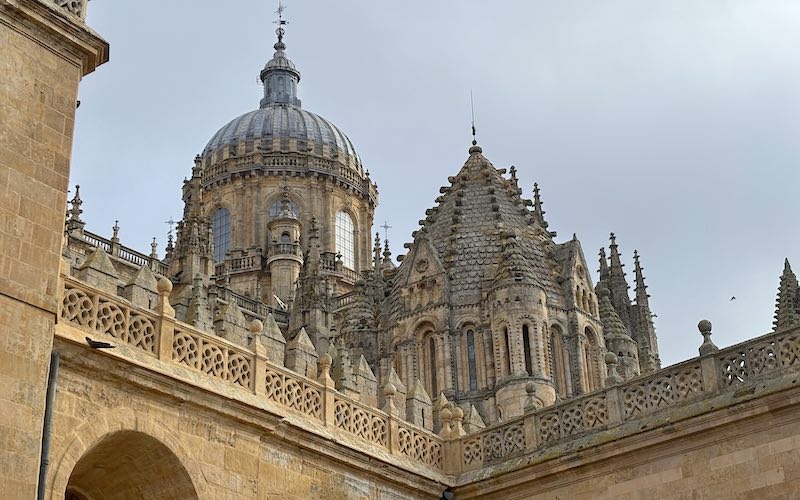
One of the most unique features of Salamanca, Spain, is its two cathedrals standing side-by-side: the Old Cathedral (Catedral Vieja) and the New Cathedral (Catedral Nueva). This was an absolute treat for me as ‘Templeseeker’! The two Cathedrals will take you on a fascinating architectural journey through time. You pay to enter the Cathedrals as a tourist, and both Cathedrals, old and new, are included in the same ticket. You enter the new Cathedral first and then proceed into the old one, which is attached. This is why I have chosen to write about them in that particular order, my blog here is written as you would view them, rather than chronologically.
The Old Cathedral (Catedral Vieja)
Dating back to the 12th century, this Romanesque cathedral is a masterpiece. Its simple beauty and incredible altarpiece are captivating. As someone who has explored numerous churches and temples around the world, from Cambodia to India, I find the preservation and intricate details of older religious sites truly remarkable. The most astonishing part of the old Cathedral, for me, was the chapel of Saint Martins (San Martín), which contains remarkably preserved 13th Century Frescos. The chapel is most famous for its medieval-style “Juicio Final” (Last Judgment) mural.
Also in the Old Cathedral of Salamanca, you will find a stunning retablo altar piece, which was made in between 1430 and 1450.
Sadly, the cloisters and many parts of the Romanesque Cathedral were destroyed by the Lisbon earthquake in 1755. However, there are ongoing renovations, and the cloister is included as part of your entrance ticket.
The New Cathedral (Catedral Nueva)
Built between the 16th and 18th centuries, this Gothic and Baroque masterpiece is immense and awe-inspiring. Make sure that you climb the towers for incredible panoramic views of Salamanca and a unique perspective on the cathedral itself – the chance to see the city from above should not be missed.
The University of Salamanca
As mentioned earlier, the University of Salamanca is one of the oldest universities in Europe and has played a pivotal role in the city’s history. Its stunning facade, adorned with intricate Plateresque carvings, is a sight to behold. Spend some time trying to find the famous “frog” carved into the facade – local legend says finding it will bring good luck!
Exploring the university’s historic buildings gives you a real sense of its enduring academic legacy. It reminds me of the rich educational histories I’ve encountered in my travels, fueling my continuous learning about world cultures.
Casa de las Conchas (House of Shells)
This unique Gothic-style palace, built in the late 15th century, is adorned with over 300 scallop shells – a symbol of the Camino de Santiago. It’s an architectural marvel and a great photo opportunity. Inside, it houses a public library, and the central courtyard is beautiful. It’s details like these that make Salamanca, Spain, so incredibly charming.
Convento de San Esteban
This Dominican monastery is another stunning example of Plateresque architecture. The facade of the church is incredibly detailed, and the cloister inside is peaceful and serene. For those interested in religious history and architecture, this is a must-visit in Salamanca.
Exploring Salamanca beyond the main sights
While the iconic landmarks are essential, there’s so much more to experience in Salamanca, Spain. As a solo traveler, I love to wander off the main tourist paths and discover local gems.
Gardens and green spaces
Take a stroll through the Huerto de Calixto y Melibea, a charming garden with romantic literary connections, offering lovely views of the cathedrals. It’s a perfect spot for a moment of quiet reflection, away from the bustling streets.
Nightlife and gastronomy in Salamanca
Salamanca, Spain, truly comes alive at night, especially around the Plaza Mayor. The city has a fantastic gastronomic scene. I always recommend trying some local tapas. Head to Calle Van Dyck, known for its concentration of tapas bars, and enjoy a traditional Spanish evening. Even as a solo female traveler, joining the locals for tapas is a wonderfully immersive experience.
The city’s vibrant nightlife, driven by its student population, means there are always lively spots to enjoy, but also plenty of quieter cafes and bars if you prefer a more relaxed evening.
Combining Salamanca with other Spanish adventures
If you’re planning a longer trip to Spain, Salamanca is well-connected and can be easily combined with other destinations. For instance, you could travel to other cities in Castile and León (such as Valladolid or Zamora), or visit Avila, one of the highest Spanish cities. Alternatively, you could head towards Portugal, which is not too far away. They are currently building a high speed train between Madrid and Lisbon, which is going to be a game changer. Spain is a fantastic country for solo female travel, offering diverse landscapes and cultures.
My travels in Europe have also taken me to cities like Paris and Brussels, but Spain offers a unique warmth and vibrant history that always calls me back.
Why Templeseeker loves Salamanca
Salamanca, Spain, epitomizes everything Templeseeker is about: a rich tapestry of history, culture, and stunning religious architecture. From the grand scale of its cathedrals to the charming details of its Plaza Mayor, the city offers endless opportunities for discovery and reflection.
For me, exploring places like Salamanca is more than just sightseeing; it’s about connecting with the past, understanding different cultures, and empowering other women to embark on their own incredible journeys. My degree from Manchester University in World Religions and Theology continually draws me to places with such profound historical and spiritual significance.
Whether you’re exploring ancient temples in Asia, historical sites in Europe like Salamanca, or navigating the souks of Marrakech, the spirit of Templeseeker is about informed, adventurous, and fulfilling travel.
So, pack your bags and get ready to be enchanted by the golden city of Salamanca, Spain. If you have any questions about solo travel or want more specific tips, feel free to reach out to me, or connect with Templeseeker on Facebook!